https://www.ft.com/content/6acbbc1e-3588-11df-963f-00144feabdc0 It is bitingly cold as two men in rubber waders push their small boat out into the current of the Suffolk Stour in the dim first light of a December morning. The hands of the man crouching in the bow are raw with the chill as he gropes for a rope hidden somewhere beneath the surface. Britain is in the grip of a harsh winter and the silver eel fishing season is drawing to a close. Undeterred, he hauls on the rope and slowly the folds of a fyke net begin to appear. The effort required to lift the long conical trap pulls the craft upstream against the current as the low sun catches droplets of icy water, held for a moment sparkling in the mesh.
The net appears to be empty until, as the final few feet clear the surface, there is a blur of thrashing movement. Reaching in, Adam Piper, fisheries officer, grabs his prize. Or at least he tries to. Because nothing is more slippery than an eel. The whole scene would be a timeless slice of country life in East Anglia were it not for the Environment Agency pick-up truck parked nearby, complete with an array of electronic tagging gadgetry.
The method of fishing may be traditional, but this is part of an unprecedented wave of scientific inquiry into a species that remains largely mysterious: Anguilla anguilla, the European eel. With its snake-like appearance, slimy skin, nocturnal habits and near-mythical ability to slither over wet grass and mud from one watercourse to the next, the eel has often been the subject of fascinated revulsion. To many anglers, it is an unwelcome catch, since its strength means the experience is closer to wrestling than fishing. Eels have a primitive nervous system and are notoriously difficult to kill; even chopping off the head results in the unsettling spectacle of the fish writhing around for minutes as if unharmed. Tenacious it may be, but even so, this ancient inhabitant of Europe’s rivers is fast disappearing, its population apparently in freefall.
In a story of scientific mystery, climate change, business interests and tangled political intervention, the lowly eel has become one of Europe’s top conservation priorities. “Eels are in crisis,” says Heidi Stone, the Environment Agency’s fisheries policy manager. “There’s a real sense of urgency. Eels have more protection than salmon now.”
Eels were once so plentiful they were used as currency. Medieval records show that in 1201, payment for Glastonbury Abbey’s £13 in assize rent from the surrounding manor comprised “3,000 eels from the fishing at Stathe weir”. More recently, in the same area of the south-west, where the funnel-shaped Severn estuary collects the tiny incoming eels as they arrive from their Atlantic spawning grounds, local fishers with dip nets have found them a lucrative sideline. At their peak price a few years ago of up to £600 a kilo, eels offered rich pickings: some fishers could net up to 12kg in a good night at the peak of the spring season. “There were pound coins running up these rivers,” says Stone.
In a hard-pressed rural economy, certain locals were making up to £30,000 a year from selling the minuscule juvenile eels on to distributors that shipped them to fish farms in Europe and Asia. As eels have never been bred successfully in captivity, wild stocks are the only source of fish for the aquaculture industry. The little elvers command premium prices from farms that buy in hundreds of thousands of them and grow them on to maturity for sale as food; they are a particular delicacy in parts of Asia, where fish farms pay the highest prices – it is expected that France will export 14.5 tonnes of glass eels to China this year, and there are reports of prices up to €800 a kilo. In an age when goods flow relentlessly from the factories of the east to the shops of the west, the eel swims against the current, a profitable western export to the east.
Though it is a culinary delight in many countries, in Britain the eel has long been the food of the poor. Abundant and easily caught from turbid urban waters, the jellied eel became the archetypal symbol of London’s working class Cockney cuisine. The dish of chopped eels, boiled in a spiced stock that is allowed to cool and set into a jelly, grew popular in the 18th century and is still sold in the pie and mash shops of the East End. But the eels you’ll find in those pie and mash shops now come from Northern Ireland or the Netherlands. Eels were one of the first species to recolonise the Thames estuary after it was declared “biologically dead” in the 1960s due to industrialisation. But the Thames population has crashed in the past five years, falling by as much as 98 per cent, according to recent research from the Zoological Society of London. And down in the south-west, most fishers have given up catching the tiny elvers: the haul is no longer worth the effort of long nights spent wading in frigid water.
The fact – and there are precious few facts when it comes to eels – is that the number of immature “glass eels” reaching Britain’s shores has dropped by more than 90 per cent in three decades, and the trend is accelerating. Details beyond that become hazy. The numbers of older, “yellow” eels in Britain’s river systems are down too, probably by about 60 to 85 per cent, depending on location, though there are scant data available. And no one can say with confidence how many mature “silver” eels leave Britain’s rivers to return to sea and complete their lifecycle by spawning.
Eels are under threat from all sides. The ocean currents of the Gulf Stream and North Atlantic Drift that carry their larvae back to land from their place of birth out in the Atlantic are shifting direction as sea temperatures rise, and so many of the larvae are missing European shores altogether. In addition, our rivers are increasingly blocked by manmade structures and punctuated by hydro power intakes whose turbines act as mincing machines. Commercial trawlers take millions of glass eels a year from the Bay of Biscay, wetland habitat has decreased dramatically, and a parasite introduced from Asia has infected the European population. Or perhaps something else entirely could be causing the population crash. No one knows for sure.
A host of scientific research projects, ranging from radio tagging at sea to increased population counts and surveys of the effects of river barriers, is in full swing and could provide some answers in the next few years. But for now, the conundrum for scientists is daunting. How do you save a species that is in steep population decline when it is under heavy fishing pressure, enduring habitat loss, being attacked by a potentially devastating parasite, suffering the effects of climate change; when it cannot be bred in captivity; and when there are almost no reliable data on population numbers and spawning success?
That eels spawn in the Sargasso sea is one of those snippets of schoolroom trivia that most people know and accept without question. In fact they have never been observed spawning anywhere at sea. Johannes Schmidt, a scientist who married into the Carlsberg brewery family, was the first to identify eel larvae at sea (they’re shaped like willow leaves) during a voyage in the 1920s. He noticed they were smaller near the Sargasso Sea and became larger as the ship neared Europe’s continental shelf. He concluded that eels spawned in the Sargasso, an area in the middle of the north Atlantic with particularly calm waters which encompasses the Bermuda Triangle. His theory has never been disproved.
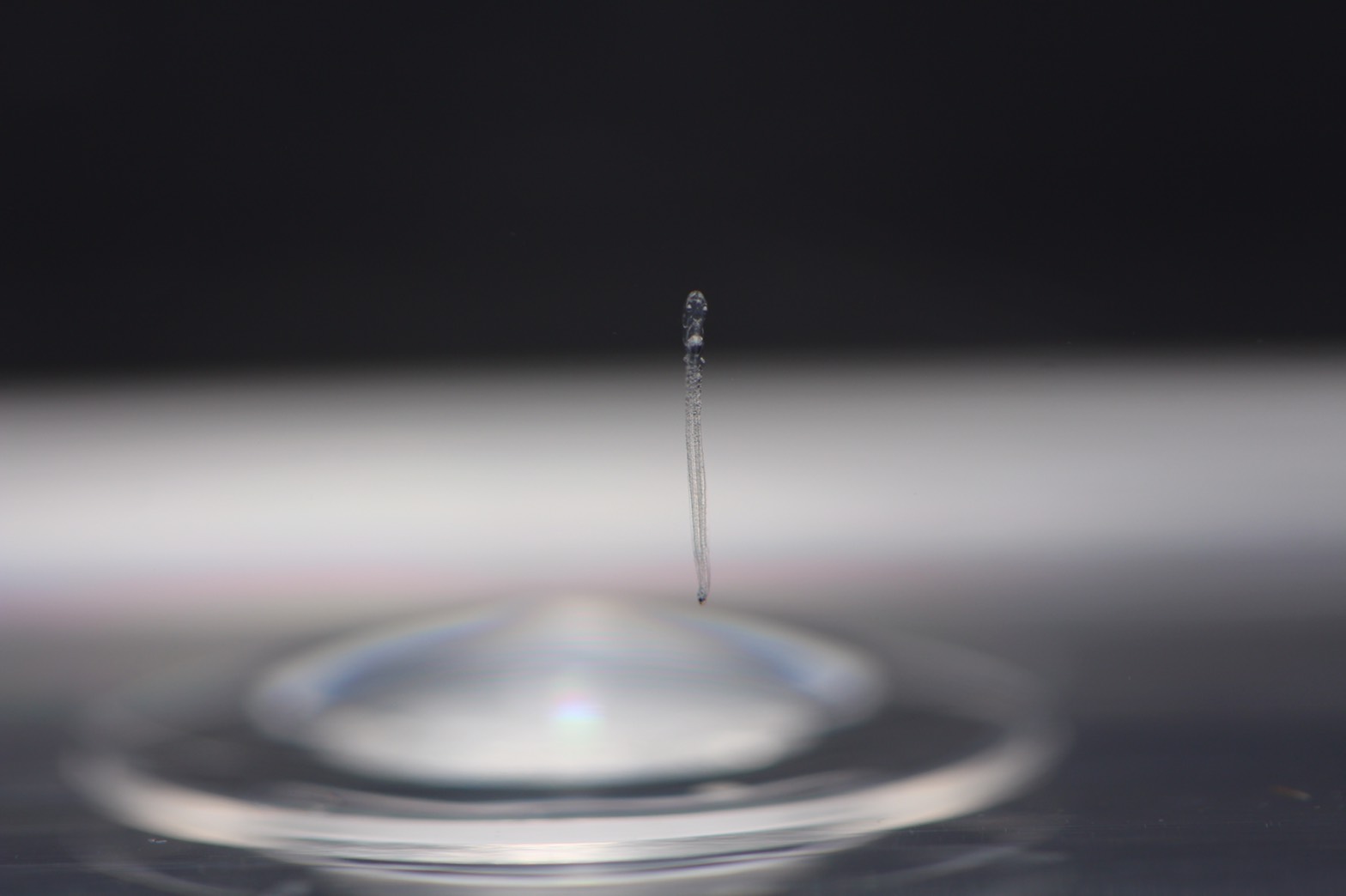
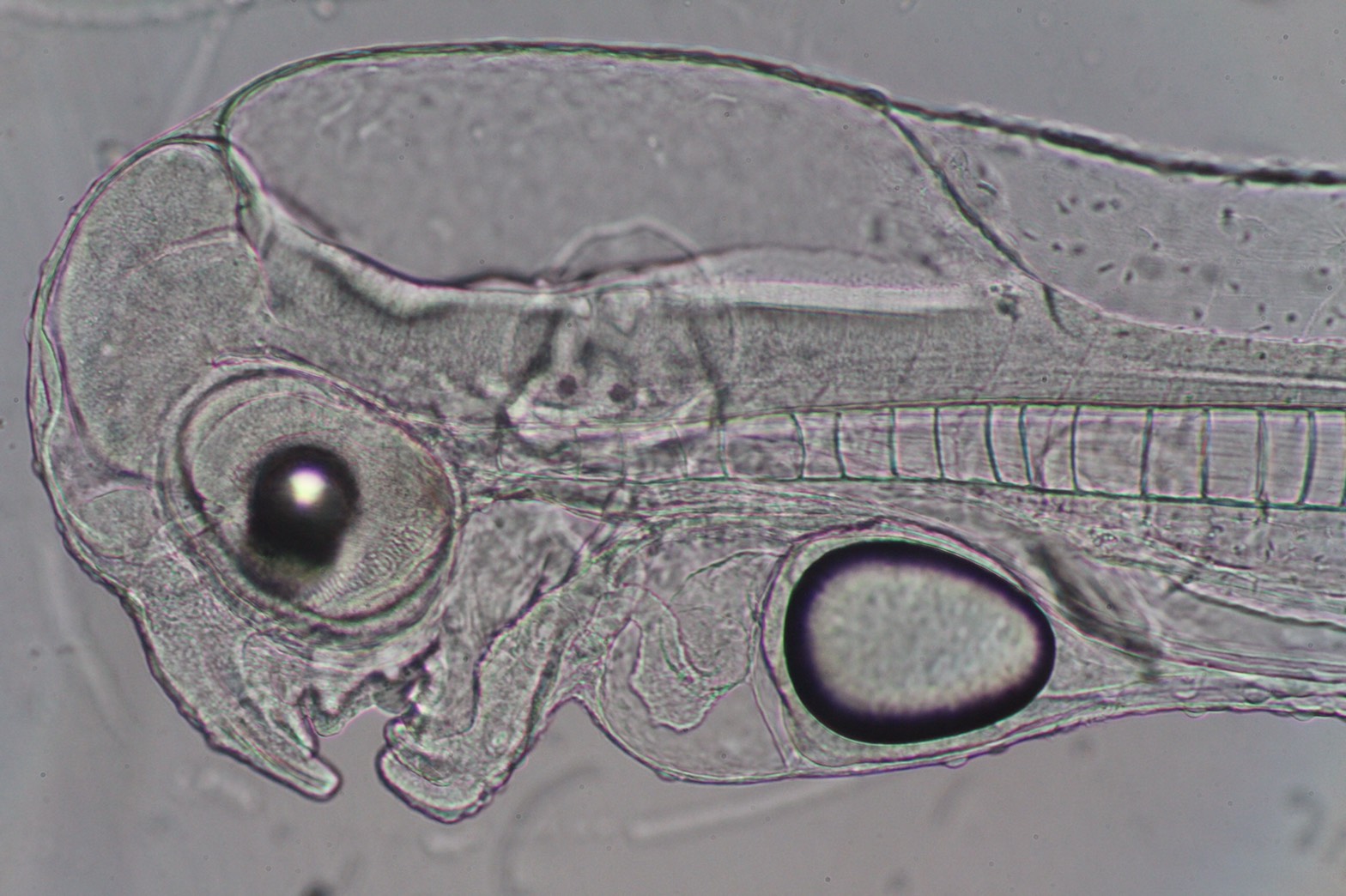
The transparent larvae, known as leptocephali (small heads), drift on sea currents until they reach European shores as glass eels. They then wriggle up river estuaries and into freshwater systems where they will feed, grow and spend most of their lives. In large densities, such as those traditionally found in the rivers Severn, Wye and Parrett, which all drain into the Bristol Channel, the majority of glass eels, or elvers, remain male. But where densities are low, such as the rivers on the east coast of England like the Suffolk Stour, many change from male to female to improve the odds of successful spawning.
That is just one of the eel’s unique characteristics. The fish can also survive on land for long periods by sealing water within its gills, and can leave the water and travel over land from one resting place to the next. After about seven years for males, and up to 12 for females (though they have been caught in fresh water at up to 25 years old), the yellow eels mature into silver eels, which migrate back down the river and disappear out to sea. What happens after that is still a mystery, although some radio tagging experiments are now under way that should reveal where they end up. Tagging experiments have already revealed more about how eels migrate, suggesting, for example, that they swim closer to the surface during the night. But scientists have not yet built up a full picture of their migration routes.
In scientific terms, the eel’s life cycle appears capricious. “It is senseless to spawn in the sea, where there are more predators, and then feed in fresh water where there is less food,” says veteran fisheries biologist and author Richard Shelton. Indeed, the pattern of the eel’s life presents an almost perfect mirror image of the Atlantic salmon, which spawns in the relative safety of fresh water and then feeds on the abundance of the sea. “The salmon’s life cycle seems to make much more sense,” says Shelton. “That is until you realise that there is a niche in freshwater for a fish that burrows into the silt. Only the eel fits that niche. And we know nature abhors a vacuum.”
A concerted Europe-wide effort to save an endangered species is a rare thing, even more so when the species in question is as slimy and generally media-unfriendly as the eel. But those who would write the endeavour off as a quirk of Brussels are missing something: the European eel industry is worth tens of millions of euros a year. “Politics always comes down to money,” says Heidi Stone at the Environment Agency, “never to conservation.”
In Britain, only a handful of people make a living from eel fishing, and the UK accounts for less than 2 per cent of the European catch. But in continental Europe, eel fishing is a much more important business – some 30,000 tonnes of glass eels are caught across Europe each year, many of which are exported to China. “In France, there are entire villages geared towards fishing for eels,” says Stone. It is this economic imperative that has brought the promise of protection by Brussels. In response, the European Union has implemented a continent-wide stock recovery programme, instructing member states to ensure that 40 per cent of the number of eels that would exist in pristine conditions survive to migrate back to sea.
In the UK, Stone and her colleagues are taking Brussels’ drive to save the eel seriously. “If EU countries don’t achieve their targets, they will be penalised. There are big charges for infraction, potentially hundreds of millions.” But urgency is relative when it comes to European politics. The UK’s plans have still not been approved by the Commission even though the regulations were introduced in 2007. And a bigger problem is whether such targets make sense at all. There are no data on what could be considered a pristine population of eels, and scientists have precious little idea of how many silver eels are escaping back to sea to spawn. Eels, as the experts will tell you, are slippery customers, notoriously difficult to catch in surveys.
“What we are really trying to do is find out what the status of the eel stocks is,” admits Miran Aprahamian, principal scientist at the Environment Agency. “For most of our rivers, we are in a data-poor area. We have not got a good quality baseline for all our rivers.” The agency team is stepping up monitoring and using information from areas where it has better-quality survey data to create computer models of populations in other river basins. After some persuasion, Aprahamian reluctantly offers an estimate of how many silver eels are currently migrating from British waters – three million eels, or about 1,200 tonnes. “We haven’t got a bundle of confidence in it,” he concedes.
Yet conservation programmes cannot wait for accurate data. Nor can biologists do much about marine survival and spawning. What they can do is to make sure eels can migrate up and down our watercourses. Since the second world war, thousands of old wooden weirs, gates, tidal barriers and sluices in rivers – all of which let eels slip through – have been replaced with ultra-efficient concrete and steel structures, which don’t. This change has created impassable barriers to migration.
The eel pass at Greylake Sluice on the King’s Sedgemoor Drain, which cuts a line across the Somerset levels, does not look very impressive. It’s really just a metal gutter lined with plastic bristles that has water trickling through it. Even Andy Don, project co-ordinator of the UK’s eel management plan, did not expect much when he installed it last year. A couple of nights later, he settled down to watch the images from the CCTV camera stationed above it. He couldn’t believe what he saw. “I thought we might get a couple of hundred using it. We had no idea. Then we got more than 10,000 in that one night. It just went on and on for hours.”
It turns out that the King’s Sedgemoor Drain, which joins the River Parrett (one of the main rivers to which glass eels return from the sea), is an eel superhighway. And no one knew. In fact, wherever Don has installed an eel pass – and the number is growing fast – it has soon been used by hundreds if not thousands of eels. “Put in a pass and suddenly you enable huge tracts of habitat to become available,” he says.
The simplest way to help eels might be just to stop fishing for them. But that would remove the political imperative that underlies the rescue plan. Instead, the fishing season has been curtailed and quotas have been set to limit the quantities of glass eels that can be shipped to Asia. But while trawlers might well be taking a toll, Stone says the British eel fishing industry, which is restricted to dip nets, does little damage: “As long as it’s small and controlled it is beneficial, because if you don’t have commercial fishing, we couldn’t bid for European fisheries funding.”
Peter Wood is quick to agree. He is Britain’s only glass eel entrepreneur. Spotting the potential of the fishery in the south-west, he set up UK Glass Eels in Gloucester decades ago to buy the elvers from fishermen and export them across Europe, winning a Queen’s Award in the process. UK Glass Eels now controls pretty much the entire British elver trade. Wood points to loss of habitat as the prime factor in the eel’s decline, but is unequivocal on the threat. “The species is not at risk,” he declares. “Eels will not become extinct. What is at risk is the aquaculture industry in Europe, which is worth millions of euros.”
His catches peaked in 1979 at 100 tonnes of glass eels, made up of about 300 million of the little fish. But even then that was unusual – typical annual catches were closer to 30 tonnes. Reports suggest last year’s catch was less than a tonne, but Wood will confirm only that it was his worst year. “I don’t want to tell you the exact number because I don’t want my competitors to know,” he says.
All his catch last year was sold for fishery restocking programmes in Ireland, Sweden, Belgium, Germany and the Czech Republic, though in a normal year 40 to 50 per cent would go to aquaculture. He believes the European plan to create a sustainable fishery is welcome but has little faith in its implementation. In fact, quota rules are already being flouted on the Continent, he says. “Under the plan, 35 per cent of the European catch last year should have been reserved for restocking, with the quota increased every year,” he says. “But it just has not happened because of the huge prices paid by the Asian market. There’s nowhere we can purchase glass eels for restocking. There’s a good plan in place, we just need to follow it. But the French are ignoring it.”
Back on the Suffolk Stour, Adam Piper is hunched in the bow of his boat, staring at a tiny LCD screen set into a grey plastic box. As he floats down the river, the electronic gadgetry suddenly issues a string of beeps. He smiles as if meeting an old friend, which in a way, he is.
The screen flashes up the number 62291, the code for a fish that he has recently tagged and released. Suddenly he is hearing four or five fish at the same time, each emitting different code numbers. His hands, almost raw from the cold and damp, twiddle frantically with the receiver. “It’s nice to find them and know that they are still there and surviving,” says Piper. “I always wonder what happens to them so it’s great to go down the river and encounter them again. I’ll often find a fish in the same place for a few days and then the next day it will suddenly be miles on.”
Piper has started a programme of tagging silver eels and has installed hydrophone receivers at various locks, sluices and turbine intakes to follow the fishes’ progress downstream. “The idea is to find out how quickly eels migrate, when they go, how long it takes them and if they can pass barriers. We need to know how many make it to sea and whether they are delayed by structural barriers or possibly killed by pumps and turbines.”
Piper has given up his managerial role at the Environment Agency to pursue his research as a PhD project, taking a hefty pay cut in the process. But he is adamant the research must be carried out quickly. “Eels are just a remarkable species and there are massive gaps in our knowledge about their life cycle. We need to be studying all possible factors that may be causing the decline. We have to find out as much as we can about these fish before it’s too late.”
The eel’s best hope now could be, perversely, the aquaculture industry itself. No one has yet bred eels in captivity, and so all the elvers grown in fish farms must come from the wild. The race to breed eels is on, however, and scientists from the Netherlands and Japan are thought to be getting close to achieving their goal. The latest theory is that the stress on the eels’ muscles during their long journey back to the Sargasso Sea triggers sexual maturity and spawning, so scientists are using tanks with strong currents to replicate the experience of ocean migration. Eggs have been successfully hatched but so far no larvae have grown into elvers.
Success with captive breeding might relieve at least one of the pressures on the dwindling eel population. And, given the value of the eel industry worldwide, it would be a highly profitable discovery, reflects the man in charge of managing Britain’s wild stocks, Andy Don. “The company that does that is going to be minted.”
Bob Sherwood is the FT’s London and south-east correspondent. He writes about fishing for the magazine’s Pursuits section.
A lifetime on the riverbank
At secret locations on the Dorset River Stour and the Hampshire Avon, Roger Castle has been catching eels for three decades. Probably England’s last remaining professional silver eel fisherman, the 75-year-old is still to be found on the riverbank on the coldest and darkest autumn nights, catching the fish in his traditional wooden eel rack and fyke nets. The former biology teacher has been making a living like this since 1979.
Hardly any wooden eel racks, once common on England’s great estates, are still in use. But under cover of darkness, Castle operates his rack, which throws eels up from the water on to its wooden staging and allows them to be kept alive within the structure’s submerged baskets. Early in the morning he checks the success of his fyke nets, often braving icy floodwaters to bring them in. “It’s cold, wet and uncomfortable,” he says, “but it is very exciting. It’s a rural tradition and it’s become a way of life for me. But it’s not an easy way to make money. And it’s dangerous in heavy water.”
The best time of year to catch silver eels is October and November, though Castle fishes from June to December. New moons are best, he says, although the fish will migrate at any time of year if the river is in flood. In the best seasons, Castle used to catch a tonne and a half of fish, all of which were bound for a Somerset smokery. These days, his catches have halved.
He insists he takes only a tiny part of the breeding stock and says it is French trawlers that do the real damage. But he does not know how long he can go on. Fishing seasons are being shortened to aid conservation and, combined with falling catches, his livelihood is under threat. “I’ll be saddened if a lifetime’s work is ended prematurely,” he says. “If I thought I was even a small cause of the problem, I would stop of my own volition.”
 Eels are mysterious animals: more than 100 million years old, they are born in the Sargasso Sea in the Caribbean and transported by the Gulf Stream to the coast of Europe, stretching from Egypt to Norway.